

| July 19, 2023 The Association for the Study of African American Life and History Opposes the Supreme Court’s Affirmative Action Ruling On Thursday, June 29, 2023, the United States Supreme Court ruled against the use of affirmative action in university and college admissions. The six conservative Justices concurred with the opinion to eliminate race as a factor in university and college admissions decisions. Supreme Court Justice Sonia Sotomayor issued the dissenting opinion for the three liberal justices. Justice Ketanji Brown Jackson wrote a concurring opinion. SCOTUS’s decision will have a disastrous effect on Black people and other racially oppressed groups. The nine states that previously banned affirmative action witnessed a sharp decrease in Black student enrollment. In California after the 1996 ban, Black student enrollment at Berkeley and UCLA plunged by 40 percent. In 2006 Michigan also abolished affirmative action in admissions. Subsequently, in 2022, the enrollment of Black and other students of color was less than half (3%) of what it had been prior to the elimination of affirmative action (7%). This major decision turns the clock back on the use of affirmative action in other areas of American life where historic racial discrimination has been endemic, especially in employment. Additionally, the court’s decision in 303 Creative v. Elenis recalls issues posed during debates about the 1964 Civil Rights Act. Business owners then also challenged that cornerstone civil rights legislation claiming it violated the “personal rights of persons in their personal convictions and in their choice of associates.” Therefore, the Association for the Study of African American Life and History (ASALH) disagrees with the Supreme Court and condemns its decision as ahistorical, shortsighted and perversely racist, using color blindness to further racial discrimination. As the oldest Black scholarly community and the founders of Black History Month, ASALH members are well aware of the country’s ongoing racial oppression against African Americans and other oppressed groups. The conservative super majority rejects the use of race-conscious remedies to resolve past racial discrimination. The court holds that since the passage of the 14th Amendment the United States Constitution has been colorblind, and has been misconstrued by previous courts. For instance, they let stand a Mississippi law that disfranchised persons convicted of 23 specific crimes. The law grew out of the state’s 1890 Constitutional Convention at which its president Sol S. Calhoon stated, “We came here to exclude the negro. Nothing short of this will do.” In the justices’ view, the 50-year policy of affirmative action to level the playing field in education and employment for African Americans and other oppressed groups was a gross mistake. Supreme Court Justice John Roberts is on record as having opposed the 1964 Civil Rights and the 1965 Voting Rights Acts, which his court gutted in its Shelby v. Holder 2013 ruling. Not surprisingly, in the Harvard University and the University of North Carolina rulings, the Chief Justice declared in the majority’s opinion that: “One of the principal reasons race is treated as a forbidden classification is that it demeans the dignity and worth of a person to be judged by ancestry instead of by his or her own merit and essential qualities.” Rice, 528 U. S., at 517. But when a university admits students “on the basis of race, it engages in the offensive and demeaning assumption that [students] of a particular race, because of their race, think alike,” Miller v. Johnson, 515 U. S. 900, 911–912 (1995) (internal quotation marks omitted)—at the very least alike in the sense of being different from non-minority students. Similarly, Justice Clarence Thomas compiled a long argument to justify not using race as a method for admitting Black and Brown students to these highly competitive universities. Indeed, he cites the history of the passage of the 14th Amendment and its intent to assist Blacks initially in their quest for equal citizenship. But he proceeds to show that the 14th Amendment ceased being a way to make the “Negroes” “a special favorite of the laws” after cases such as the Civil Rights Cases (1883) and of course, Plessy v. Ferguson (1896). Like Roberts, he cites the famous quote from Justice John Marshall Harlan: “Our constitution is color-blind, and neither knows nor tolerates classes among citizens. In respect of civil rights, all citizens are equal before the law.” But ASALH maintains that the Constitution is not color-blind and all citizens are not equal before the law. We maintain that affirmative action continues to be necessary and should be expanded. ASALH calls upon its membership, African Americans and society at large to protest and pressure Congress to pass legislation to reverse the Supreme Court decision. ASALH’s Public Commentary Committee is charged with two tasks. The committee is in charge of drafting public statements on behalf of the executive board. These commentaries must be pertinent and relevant to the mission of ASALH. Statements should be relevant and timely on issues of Black history and conditions of Black people or persons more generally and will be posted on the ASALH Website as the official commentary of the organization and/or submitted to the national media outlets as official commentary for discussion and debate. The second task of the Public Commentary Committee is rapid response to breaking news that affects the membership and chapters of our organization. |




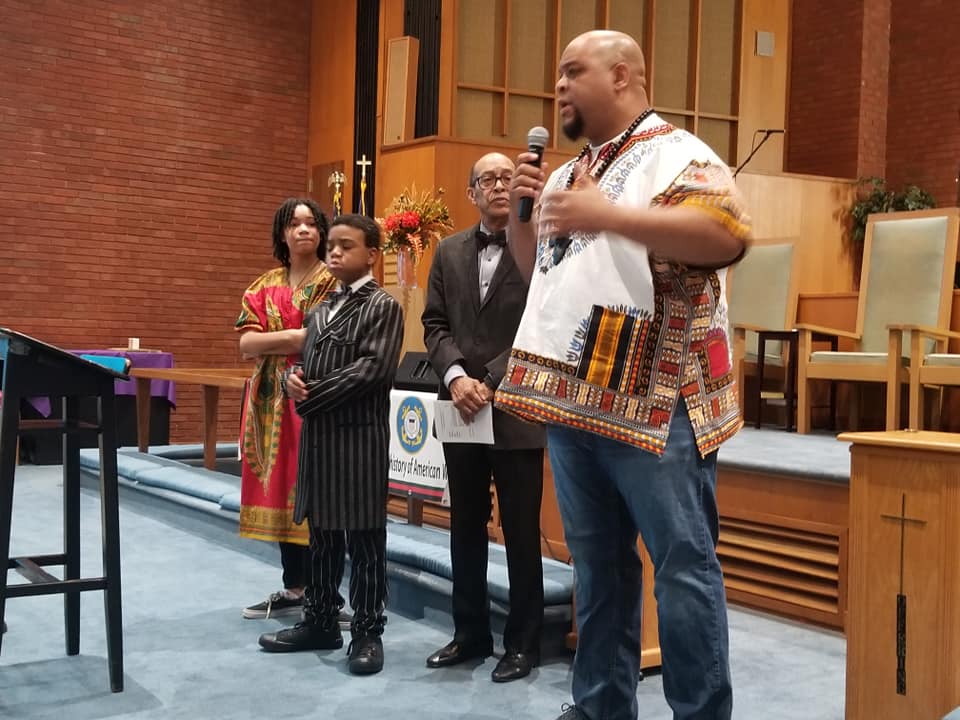


 Dr. Daryl Scott is a past president of the Association for the Study of African American Life and History (ASALH). This is a post from Scott on Facebook on May 6, 2019.


 ASALH South Florida