Members’ books and papers presented at the annual conference
The Bible of Black Prosperity: Reclaiming Lost Black Wealth
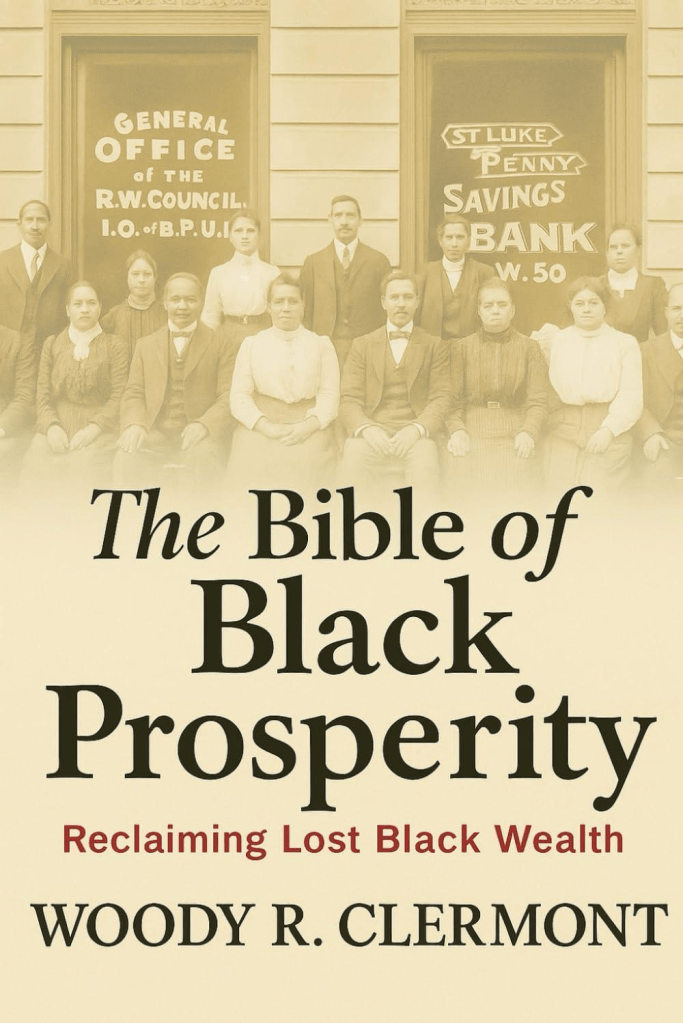
For four hundred years, Black labor built wealth that Black people were never allowed to keep. The Bible of Black Prosperity is the blueprint to change that.
Drawing on data, history, and practical policy design, Woody R. Clermont delivers a comprehensive economic vision that fuses financial engineering with moral clarity. From baby bonds and community land trusts to cooperative banking, municipal wealth funds, and inheritance reform, this book translates abstract economics into actionable steps for families, churches, entrepreneurs, and policymakers.
Each chapter explores a pillar of restoration:
Starter Capital and the Birthright Dividend — how baby bonds and early equity can close the generational gap.
Housing as the Engine of Equity — repairing appraisal bias and rebuilding the base of community wealth.
Mission-Oriented Capital — CDFIs, credit unions, and sovereign guarantees designed for inclusion.
Human-Capital Resilience — retooling education and labor for the age of automation.
Inheritance and Legal Infrastructure — turning legacy into leverage, preventing wealth leakage.
Cooperative Sovereignty — the economics of shared ownership and local self-determination.
More than a policy roadmap, The Bible of Black Prosperity reads as a declaration of independence for a new financial age — one where the Black dollar circulates with purpose, multiplies through ownership, and transforms communities from consumers to stakeholders.
For builders of: Black businesses, faith-based initiatives, cooperative ventures, and intergenerational wealth systems.
The Black Wall Streets of America: Towards a Black Stock Exchange
From the streets of Greenwood to the vision of a Black Stock Exchange — a blueprint for building generational wealth in Black America.
The Black Wall Streets of America: Towards a Black Stock Exchange uncovers the remarkable history of African American economic empowerment, from thriving Black business districts like Tulsa’s Greenwood District to the entrepreneurial spirit that fueled Black Wall Street and similar communities nationwide.
Blending history, economics, and vision, this book explores how African American entrepreneurs built wealth despite systemic racism, and how these lessons can inspire a new era of cooperative economics, Black-owned businesses, and a truly Black-led financial marketplace. Whether you’re interested in the legacy of the Tulsa Race Massacre, African American finance, or strategies for building Black wealth today, this book provides both historical insight and actionable ideas.
Black Wall Streets of America: Towards a Black Stock Exchange is a groundbreaking blueprint for building, sustaining, and scaling Black economic power in the 21st century. Blending historical insight with forward-looking strategies, this book draws from the successes of Greenwood, Hayti, Bronzeville, and other thriving Black business districts, then reimagines how these lessons can be applied in today’s globalized, technology-driven economy. It is not a hope. It is a must. It is what will be.
From Community Land Trusts and Black-led CDFIs to public procurement targets, policy guardrails, and the rise of AI-driven entrepreneurship, this book delivers a comprehensive framework for wealth creation. It explores how decentralization, rapid prototyping, and advanced manufacturing can disrupt traditional gatekeepers, allowing individuals and communities to own production, control capital, and dominate niche markets.
Readers will discover:
The historical foundations of Black prosperity—and how they were systematically dismantled.
Policy and legal frameworks that protect gains from displacement and exploitation.
How to build talent pipelines that merge STEM, the creative economy, and cooperative models.
The role of digital platforms, free markets, and globalization in creating borderless markets.
How to design a modern Black Wall Street, complete with an exchange-centered capital ecosystem.
Bold, unapologetic, and deeply practical, Black Wall Streets of America: Towards a Black Stock Exchange is both a history lesson and a call to action. It is a mandate for entrepreneurs, policymakers, and community leaders who are ready to move from survival to sovereignty—by any means necessary.
If you are ready to reimagine economic freedom, close the racial wealth gap, and build intergenerational prosperity, this is your blueprint. Anything is else is simply unacceptable.
Black Is My Ethnicity: American Is My Nationality
What does it mean to say that Black is an ethnicity and American is a nationality? This book confronts that question directly, challenging assumptions that have long gone unexamined. It argues that Black identity is not a vague label or a social convenience, but a distinct cultural and historical inheritance shaped by shared experience, memory, and creative expression.
Through history, law, culture, and lived reality, this work traces how Black identity in America developed as something far more than a category imposed from the outside. It is a peoplehood forged through struggle, resilience, innovation, and continuity. From music and literature to political movements and community institutions, the record reflects a coherent and enduring identity that cannot be reduced or dismissed.
At the same time, the book draws a clear distinction between ethnicity and nationality. American identity is civic and national. It belongs to all who are part of the nation. But ethnicity speaks to lineage, culture, and shared historical experience. Confusing the two has led to shallow debates and false equivalencies that obscure more than they reveal.
Written with clarity and conviction, this work invites readers to reconsider familiar narratives and engage with a more precise understanding of identity. It does not seek to divide, but to define. In doing so, it offers a framework for thinking about culture, belonging, and history in a way that is both grounded and honest.
This is not just a book about terminology. It is a statement about reality.
Reel Racism: Birth of a Divided Nation
For more than a century, D.W. Griffith’s The Birth of a Nation has haunted American culture. It didn’t just tell a story—it rewrote history, cementing myths of white supremacy and portraying racial terror as national salvation. The film poisoned imaginations for generations, and its lies still echo in classrooms, courthouses, and politics today.
This book takes the mask off those lies. It confronts the deliberate erasure of Africa’s great civilizations, the distortion of Reconstruction, and the cultural gaslighting that declared Black people had no history worth remembering. It shows how racism survives not only in systems, but in stories—stories told in textbooks, films, and everyday language.
But Reel Racism is more than critique. It’s a roadmap for repair. From education reform to economic justice, from reclaiming art and media to building coalitions in daily life, the book lays out structural, cultural, and personal solutions. It insists that racism was engineered, brick by brick—and therefore can be dismantled the same way.
Grounded in history, psychology, and lived truth, Reel Racism calls on readers to replace the fantasy Griffith projected with a new narrative: one of solidarity, resilience, and justice.
If you’ve ever wondered how lies become history—and how truth can take its place—this book is your guide.
From Chains to Citizenhood: The Legal Struggle for Black Citizenship
From the chains of slavery to the fight for full citizenship, a legal history that shaped America. This book traces the African American journey from enslavement to the recognition of constitutional rights, exploring the African American legal struggle that redefined freedom, equality, and justice in the United States. Through landmark cases, constitutional amendments, and grassroots movements, this book examines how Black citizenship in America was contested, defended, and ultimately enshrined in law.
Inside, you’ll discover:
The legal battles that followed the Thirteenth and Fourteenth Amendments.
How Reconstruction shaped — and failed to secure — African American constitutional rights.
The rise and impact of Jim Crow laws on Black citizenship.
The role of the courts in both denying and protecting civil rights.
The continuing struggle for equality under the law in the modern era.
Blending legal scholarship, historical analysis, and compelling narrative, From Chains to Citizenhood illuminates the enduring fight for African American equality under the law and the meaning of citizenship in America.
From Chains to Citizenhood traces the profound legal transformation that led formerly enslaved Black Americans from bondage to full legal citizenship. Anchored in the arc of U.S. constitutional development, the book begins with the infamous Dred Scott v. Sandford (1857) decision, which declared that African Americans could never be citizens of the United States. It then chronicles the turbulent years of the Civil War and Reconstruction, focusing on the Thirteenth, Fourteenth, and Fifteenth Amendments—collectively known as the Reconstruction Amendments—that abolished slavery, established birthright citizenship, and extended voting rights.
The book explores the pioneering efforts of abolitionists, lawmakers, and jurists who reshaped the legal framework of the nation. It gives special attention to key legal figures like Thaddeus Stevens, Charles Sumner, and John Bingham, and major legislation such as the Civil Rights Acts of 1866 and 1875. Through detailed case law analysis, it uncovers how Supreme Court decisions like The Slaughter-House Cases and United States v. Cruikshank undermined early civil rights protections and allowed white supremacy to regain power.
From Chains to Citizenhood also examines the rise of Black political leadership during Reconstruction and the subsequent backlash in the form of Jim Crow laws, convict leasing, and racial terrorism. The book brings to light the resilience of the Black legal tradition, citing thinkers like Frederick Douglass, Frances Ellen Watkins Harper, and W.E.B. Du Bois, and connects their visions to modern civil rights efforts.
By grounding its narrative in both legal precedent and historical struggle, the book provides a comprehensive analysis of how Black Americans fought for and ultimately redefined the very concept of American citizenship. It is both a legal history and a moral reckoning—a testament to the ongoing quest for racial justice through the rule of law.
The Truth About Us
For centuries, America has told a story about Black people that never reflected reality. Through newspapers, movies, classrooms, courtrooms, political speeches, and pseudoscience, the nation constructed a mythology of Black inferiority and sold it as truth. The Truth About Us exposes how those stereotypes were engineered, how they infiltrated every major institution, and how they continue to shape the lives and futures of millions. Drawing on history, law, economics, media studies, psychology, and within the justice system, this book dismantles the lies that built America’s racial hierarchy and reveals the brilliance, resilience, and humanity that those lies were designed to obscure.
But this is not just a book about the past—it is a blueprint for the future. It shows how distorted narratives weakened the nation politically, economically, morally, and spiritually, and it offers a path toward repair rooted in truth, accountability, and structural change. Bold, meticulously researched, and deeply illuminating, The Truth About Us is a powerful call to rethink everything America claims to know about race. For readers seeking clarity, justice, and a way forward, this book is both a reckoning and a restoration.
Kings of Purple and Gold: Carter G. Woodson and Herman Dreer, Fraternity Brothers at the Fore of Black History
The intertwined story of two extraordinary men whose scholarship, leadership, and fraternity bond helped shape the course of Black intellectual and civic life in America.
Carter G. Woodson, the father of Black history, transformed how a nation understood the African American past, insisting that history was not merely remembered but reclaimed. Herman Dreer, scholar, theologian, and educator, carried that same insistence into classrooms, pulpits, and institutions that nurtured Black leadership during the twentieth century. United not only by their brilliance but by their fraternity brotherhood, Woodson and Dreer stood at the fore of Black historical thought, institution-building, and cultural affirmation.
In this meticulously researched and richly contextualized work, Attorney and historian Woody R. Clermont explores how these two men, bound by Omega Psi Phi, advanced a vision of disciplined scholarship, service, and intellectual responsibility at a time when Black excellence itself was an act of resistance. Their lives reveal how fraternity was not merely social, but strategic, a network for cultivating thinkers, leaders, and guardians of Black history.
Kings of Purple and Gold is both a dual biography and a meditation on legacy, reminding readers that history is shaped not only by singular genius, but by brotherhood, purpose, and unwavering commitment to truth.
Judge Woody Clermont received his JD from the University of Miami School of Law; MBA, Florida Atlantic University; MS Data Analytics, Western Governors University; MSc Economics, Florida Atlantic University; BSc Mathematics, Mayville State University, BS Business, Western Governors University, BA Political Science, Binghamton University
Dr. Tameka Bradley Hobbs

Dr. Joan Cartwright
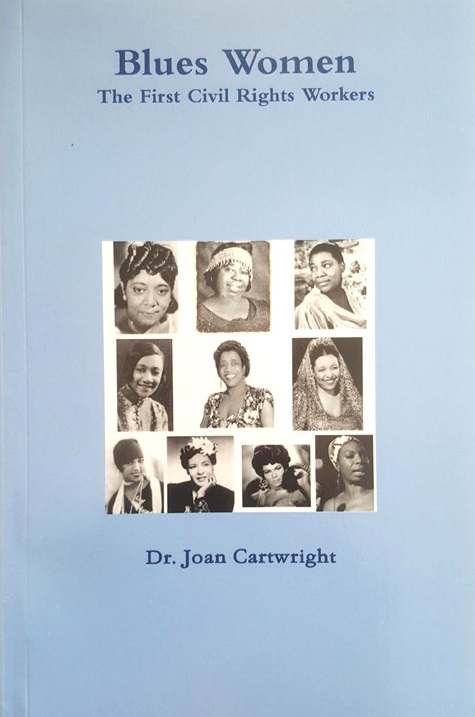

Blues Women: First Civil Rights Workers
Dr. Cartwright’s books are available at http://lulu.com/spotlight/divajc
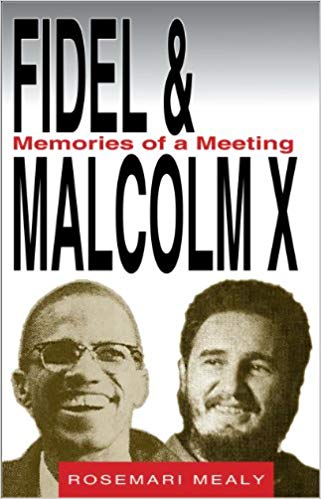
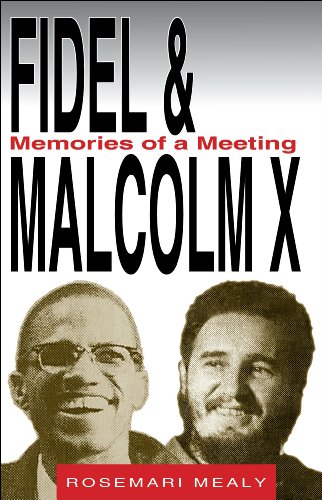
Dr. Rosemari Mealy


Dr. Sam Anderson


Jeff Carroll